


Demetra Salls: From Unanswered Questions to Advocacy
Topic: Hide on Homepage, Real Talk: Survivor, Patient & Family Stories, Your Source for Breaking News & Inspirational Stories
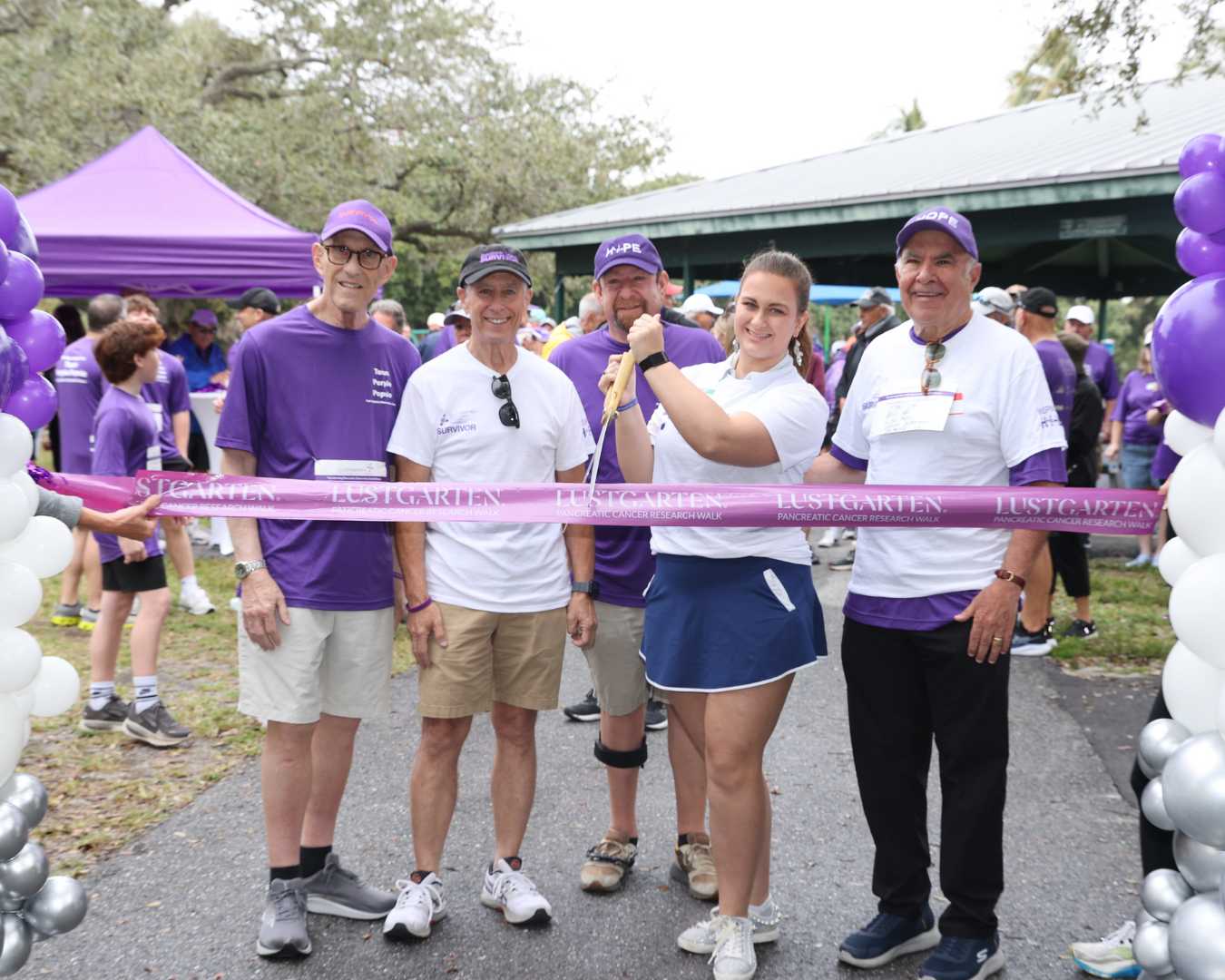

When Demetra Salls looks back on the start of her medical experience, she remembers how long she sensed something was wrong before she got an answer.
In 2020, she began experiencing unusual health issues. The symptoms she noticed were seemingly attributable to hormone imbalance, subtle but persistent changes in her body that didn’t make sense. Over the next year, from January through December 2021, she saw 10 different OBGYNs and endocrinologists. Each time, she was given the same answer: PCOS.
But Demetra wasn’t convinced, “I just wasn’t accepting an answer of PCOS, especially since there wasn’t a reason behind it,” she said.
Eventually, one endocrinologist suggested a CT scan to rule out something rare involving her adrenal glands. By that point, Demetra was exhausted from searching for answers. She almost declined the scan, thinking it would only lead to another dead end. But her mom pushed her to follow through. That decision changed everything.
“ARE YOU SITTING DOWN?”
The week before Christmas in 2021, Demetra had the CT scan. The next day, her doctor called.
“The first thing he asked me was, ‘Are you sitting down?’”, she remembered. “Not a great way to start a conversation.”
The scan showed there was nothing wrong with her adrenal glands, and there was also nothing wrong with her ovaries, meaning it had never been PCOS. Instead, doctors found a tumor about the size of a plum on her pancreas.
Demetra did what many people do after hearing the words pancreatic tumor. She searched online, “I wanted to know what I could be fighting,” she said.
What she found terrified her. At the time, the five-year survival rate for pancreatic cancer was just over 10%. “By the time my mom came home, I was on the floor crying, thinking that I wouldn’t live to see 30.”
A RARE DIAGNOSIS
After additional testing and consultations at Mayo Clinic in Rochester, Minnesota, Demetra learned that she had a solid pseudopapillary neoplasm of the pancreas, or SPPN, a rare type of pancreatic tumor.
SPPN is generally classified as a low-grade malignant tumor. While it has an excellent prognosis, it can metastasize, though this is rare. Because of that potential, it is considered malignant, even if its behavior is usually much less aggressive than typical pancreatic cancer.
On January 17, 2022, just two weeks before her 22nd birthday, Demetra underwent a laparoscopic Whipple procedure. Surgeons removed one-third of her pancreas, about 10 inches of her small intestine, and her gallbladder.
LEARNING LIFE AFTER SURGERY
Demetra spent 10 days in the hospital recovering. Physical recovery was difficult, but so was learning how much her body had changed.
She had drainage ports, abdominal scars, digestive issues, and intense pain. She also needed physical therapy to understand how to use her muscles again after surgery.
Doctors also warned her that because part of her pancreas had been removed, she had a risk of developing diabetes within five years. That meant learning how to be careful with what she ate, how to manage new dietary restrictions, and how to protect her health long-term.
Through those challenges, Demetra leaned heavily on her faith and her family, two constants that helped her navigate both the physical and emotional realities of recovery.
“I rely on my faith, and I rely on my family,” she said. “Those are the things that helped get me through it.”
“I KNEW I WAS ONE OF THE LUCKY ONES”
When Demetra was discharged, doctors told her there was likely no chance the tumor would return. They told her she could move on with her life.
But that didn’t feel right.
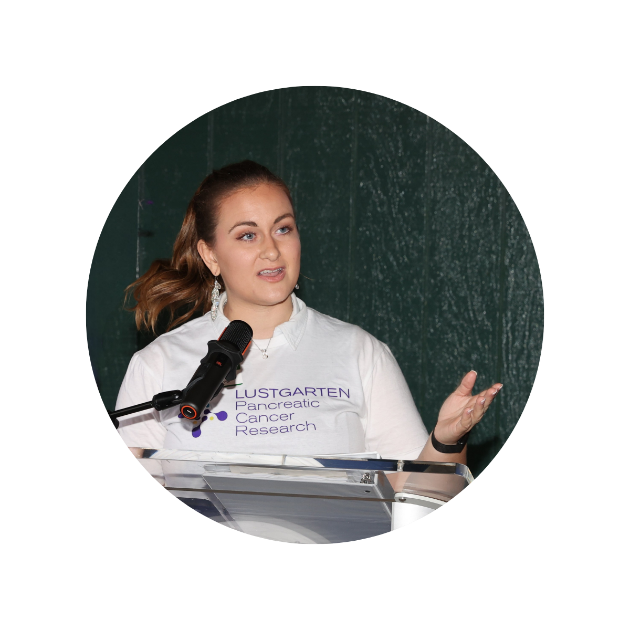
“I know that I’m one of the lucky ones,” she said. “Even though I ended up not having to fight pancreatic cancer, I saw what so many other people are going through, and I knew that I needed to be an advocate for them as well.”
Demetra began using her voice to raise awareness for pancreatic cancer research, early detection, and new treatment methods. She connected with the Lustgarten Foundation after reaching out to volunteer and attending a Walk for Pancreatic Cancer Research in West Palm Beach, Florida.
THE POWER OF KNOWING YOUR BODY
For Demetra, one of the biggest lessons from her experience is the importance of self-advocacy.
She has deep respect for doctors and medical professionals, but she also knows there are things patients understand best because they live in their bodies every day.
Her advice to others is clear: pay attention to what feels different, ask questions, and do not be afraid to keep looking for answers.
“Please learn how to advocate for yourself,” she said. “Know your body.”
WHY RESEARCH MATTERS
Demetra often thinks about how different her outcome could have been if she had been born at another time.
Her surgery, her recovery, and the quality of life she has today were all made possible by research and medical progress. “If I had been born 30 years earlier, my diagnostic solution would not have been available to me,” she said.
That is why she believes so strongly in funding pancreatic cancer research, especially research focused on early detection and new treatment options.
“Research and funding, like what the Lustgarten Foundation provides, is so paramount,” she said. “I would not have had the quality of life that I get to have without the research that’s being done by researchers every single day.”
MOVING FORWARD WITH PURPOSE

Today, Demetra works as an engineer supporting U.S. Army programs, and she continues to advocate for pancreatic cancer awareness and research. She also competes in the Miss America organization, where her platform focuses on pancreatic cancer research, awareness, and activism.
For Demetra, purpose has taken many forms: her career, her faith, her family, and her advocacy.
“I love using my voice and advocating for pancreatic cancer, and the researchers, and the doctors, and the patients who are facing this disease day to day,” she said.
And after everything she has been through, she carries a simple but powerful perspective forward: “If a plum-sized tumor couldn’t stop me,” Demetra said, “I don’t know what else can.”