


Eddie’s Story: Service, Survival, and the Clinical Trial That Changed Everything
Topic: Hide on Homepage, Real Talk: Survivor, Patient & Family Stories, Your Source for Breaking News & Inspirational Stories
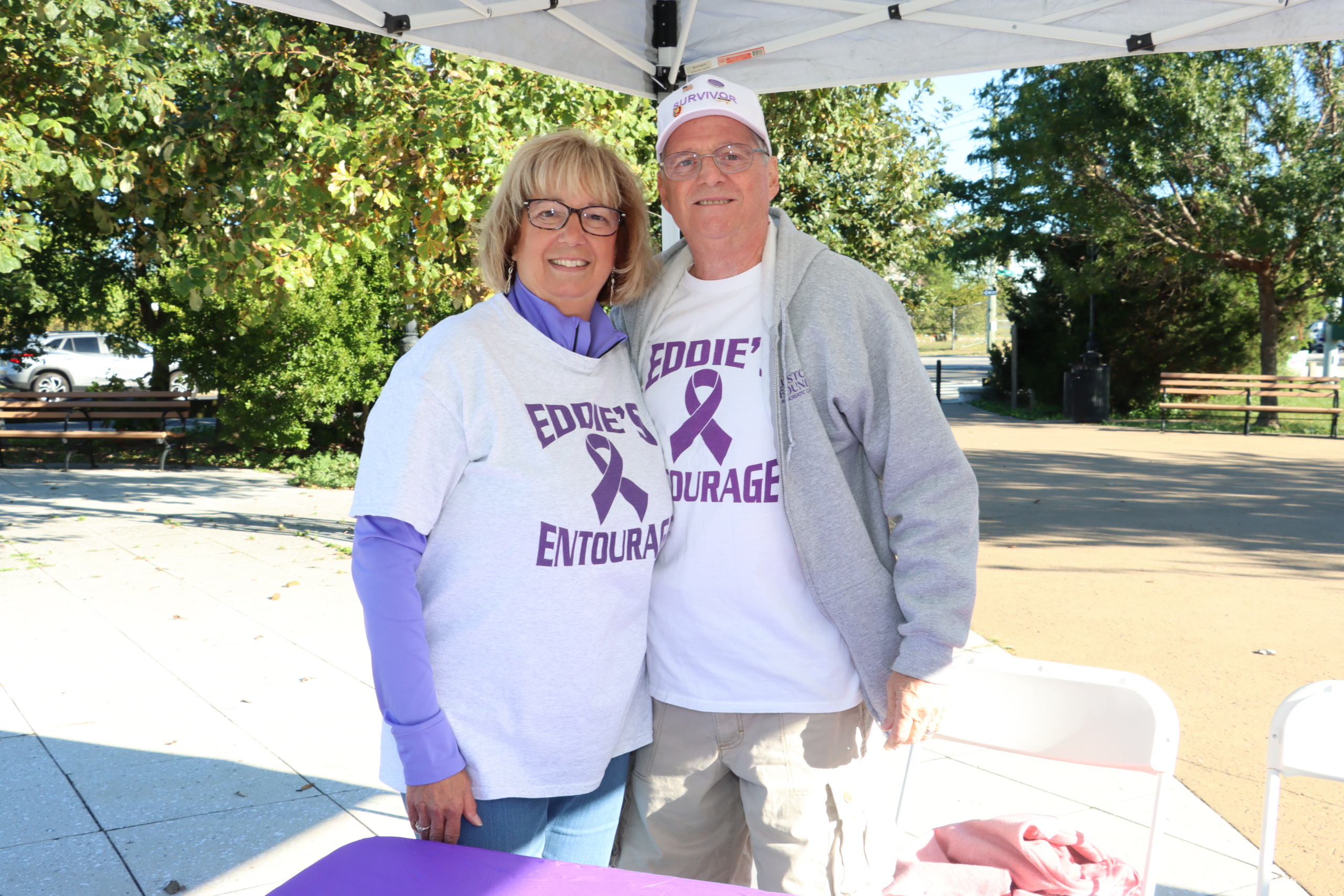
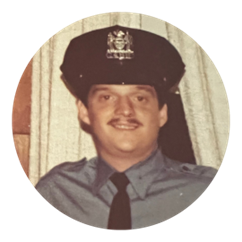
Eddie Blackburn spent his career showing up for others. A retired NYPD detective, he responded to the World Trade Center on September 11, 2001, shortly after the towers came down. In the weeks that followed, he continued working on “the pile,” helping recover victims and bring a measure of closure to families whose lives had been forever changed.
Like many first responders, Eddie carried the mindset that came with the job: keep going, stay strong, push through. “Most first responders have the attitude that we’re indestructible,” he said. Nearly two decades later, Eddie would learn just how much that day, and the weeks that followed, had changed his own life.
SYMPTOMS THAT COULDN’T BE IGNORED
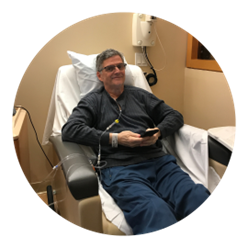
In January 2019, Eddie started losing his appetite and experiencing lower back pain. At first, doctors treated it as muscle stiffness. But by March, his symptoms had become impossible to ignore. During dinner one night, he could barely eat and began feeling severe pain in the middle of his chest. Thinking he may be having a heart attack, Eddie went to the emergency room. After tests showed the issue was gastrointestinal, not cardiac, doctors ordered a CT scan.
A few days later, Eddie learned there was a large tumor on his pancreas.
He went to NYU Langone Perlmutter Cancer Center, where a biopsy confirmed the diagnosis: pancreatic cancer. Hearing those words was devastating. “You automatically assume it’s a death sentence,” Eddie said. His cancer was determined to be environmental, related to his time at the World Trade Center.
A CLINICAL TRIAL THAT CHANGED EVERYTHING
What came next gave Eddie a chance he never takes for granted.
At NYU Langone, Eddie enrolled in a clinical trial funded through the Pancreatic Cancer Collective (PCC), an initiative founded by the Lustgarten Foundation and Stand Up To Cancer dedicated to accelerating research for pancreatic cancer patients who urgently need better treatment options.
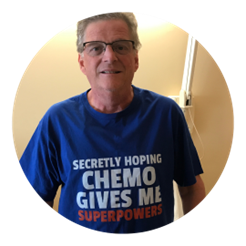
The PCC brought together medical institutions, researchers, and companies with one shared goal: moving promising science into new therapies for patients. Through nearly 30 clinical trials, more than 400 research investigators, and approximately 70 participating institutions, the Collective helped advance cutting-edge approaches to treat pancreatic cancer and improve patient outcomes.
For Eddie, that research was personal. “The Lustgarten Foundation funded the research that led to the Stand Up To Cancer trial that I was on,” he said. “That trial literally saved my life.” Through chemotherapy via the clinical trial and targeted radiation, Eddie’s tumor shrunk by more than 68%. “I thank God for that trial every day,” he said. “That’s why Lustgarten is very dear to my heart.”
FROM TREATMENT TO SURGERY
Because Eddie’s tumor responded so well, he became eligible for surgery.
Doctors performed a robotic partial Whipple procedure, removing most of his pancreas, his spleen, and several lymph nodes. As a result, Eddie is now living with type 2 diabetes, but he calls that “a small price to pay” to still be here.
For Eddie, survival has meant more time with the people he loves most: his wife, Linda; his son, Shane; his family; his friends; and the community that stood beside him throughout treatment. He wanted to be here to see his son get married. He wanted more vacations with his wife. He wanted more time, more memories, more life. That is what kept him going.
THE PEOPLE WHO HELPED HIM KEEP GOING
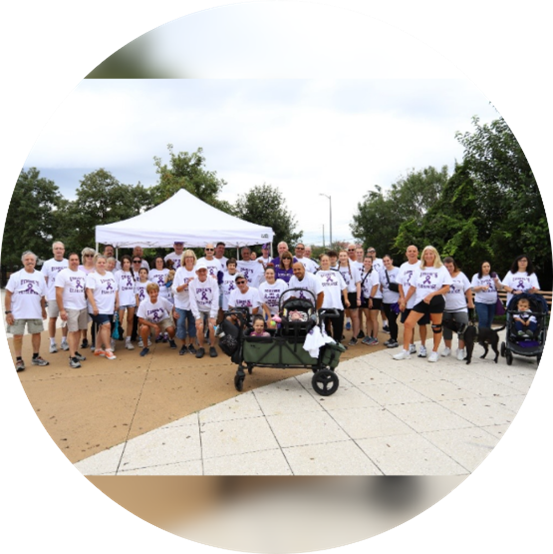
Eddie says the support around him made all the difference. His doctors and nurses at NYU remained positive. His immediate family was by his side. His best friends, Karen and Lenny, along with cousins and extended family, continued showing up for him. “I’m a firm believer, after going through this, that 80% of this battle is definitely mental,” Eddie said. “The minute you give up, I believe your body gives up. And I never gave up.”
That support also came from the first responder community. When Eddie was diagnosed, he received calls, texts, and emails from police officers and firefighters, including people he had not worked with in 10 or 15 years. “It means the world to me,” he said. “First responders, police department, fire department, it’s usually a very tight-knit group.”
FINDING COMMUNITY THROUGH LUSTGARTEN
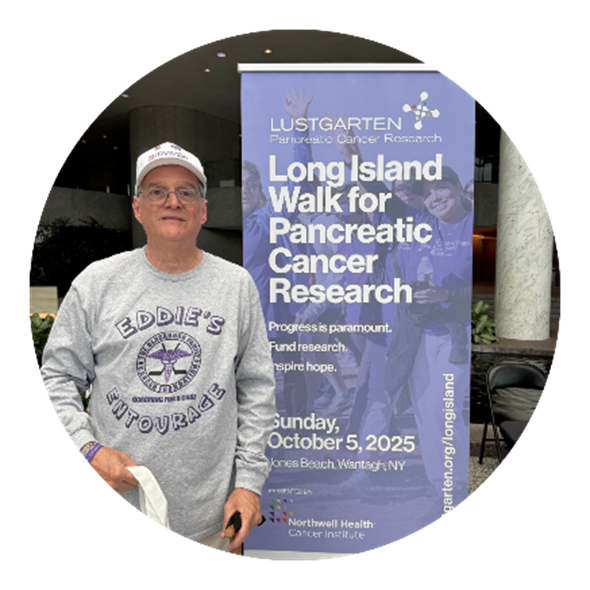
Eddie’s connection to Lustgarten did not end with the research that helped make his clinical trial possible. Through the Staten Island Walk for Pancreatic Cancer Research, the New York City Walk, and the people he has met along the way, Eddie found a community that continued to show up long after treatment. He has connected with Lustgarten team members, volunteers, and Walk leaders who made him feel supported, seen, and valued. “Everybody is so supportive,” Eddie said. “With people in your corner like that, we’re destined to move forward.”
For Eddie, Lustgarten represents more than funding. It’s synonymous with life-saving research, collaboration, community, and persistence that can help change what is possible for patients.
WHY RESEARCH FUNDING MATTERS
Today, Eddie is passionate about helping others understand why pancreatic cancer research funding matters. “Without funding, there’s no research. Without research, there’s no clinical trials. Without clinical trials, there’s no new and innovative treatments,” he said.
He has seen that progress firsthand. When Eddie was diagnosed, he remembers the five-year survival rate for pancreatic cancer being 8%. Now, years later, he points to the progress being made through targeted treatments, vaccines, and clinical trials as reasons to believe the future can be different. “Who knows what’s going to happen in 10 years?” he remarked. “It could be so much higher.”
For patients like Eddie, each new trial, each new approach, and each new discovery represent something bigger: more options, more time, and more hope.
A MESSAGE FOR FIRST RESPONDERS
Eddie’s message to fellow first responders is direct: pay attention to your body, and do not ignore symptoms. “If you have a pain that you’ve never had, go to your doctor and find out,” he said. “There’s no harm in admitting that we’re not indestructible.”
He knows that many first responders are used to pushing through pain and putting others first. But Eddie wants them to understand that getting checked is not a weakness. It is necessary.
Pancreatic cancer often does not cause obvious symptoms until it has advanced. For Eddie, back pain and loss of appetite were signs that something more serious was happening.
LOOKING AHEAD WITH HOPE
Today, Eddie is riding his bike, going to the gym, taking vacations, attending Lustgarten Walks, and sharing his experience so others know what research can make possible. For Eddie, pancreatic cancer is not the same diagnosis it once was. There is still urgent work ahead, but there is also real progress.
Eddie’s story is one of service, survival, community, and the power of sustained research. It is also a reminder that clinical trials are not just scientific milestones; they are chances for patients to have more time with the people they love.